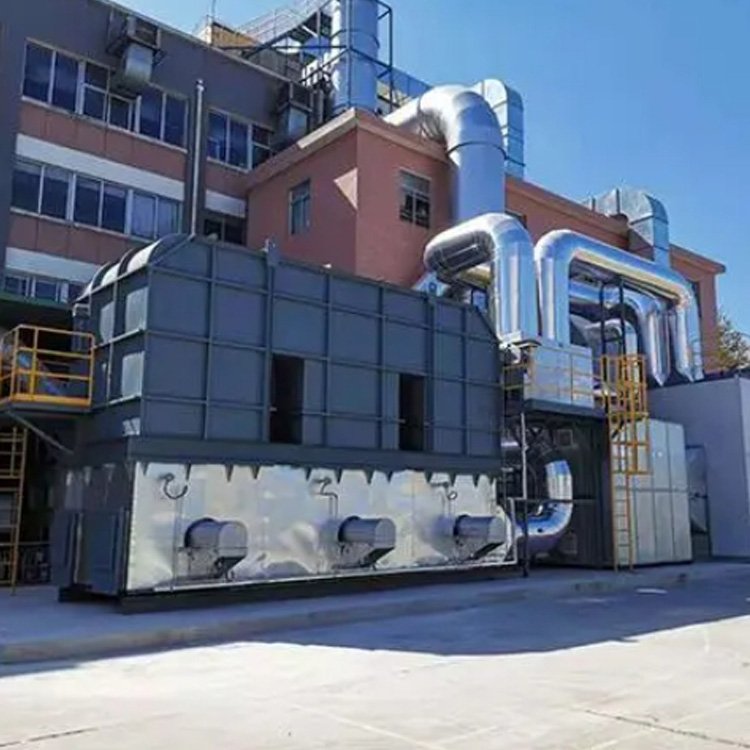
Industrial facilities generating volatile organic compounds (VOCs) face increasingly stringent emission regulations. Among thermal oxidation technologies, a catalytic incinerator stands out due to its lower operating temperatures and energy efficiency. This article examines the engineering principles, application advantages, and market trends that make this technology a preferred solution, while showcasing how a Chinese manufacturer with deep expertise delivers reliable equipment for global environmental challenges.
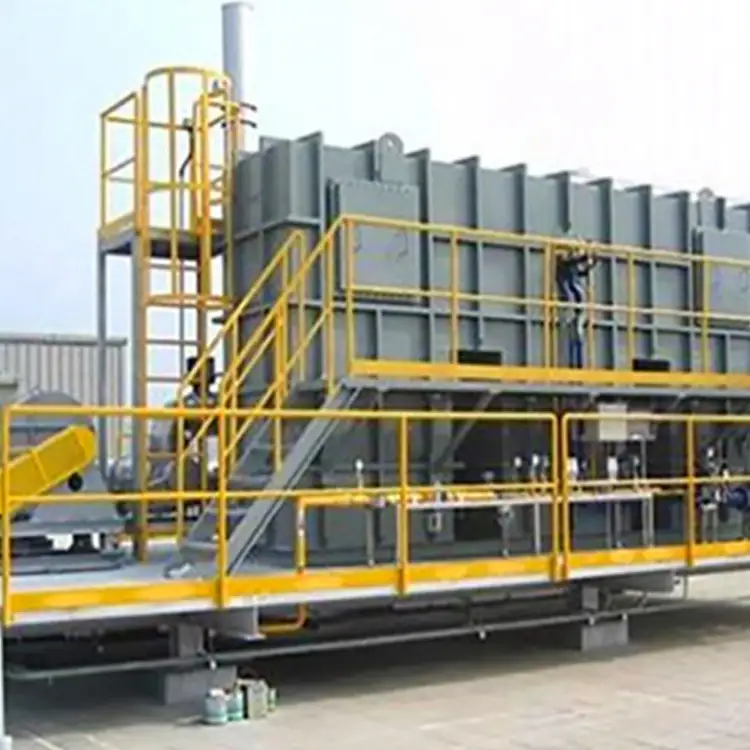
Unlike direct-fired thermal oxidizers that require extreme temperatures (typically above 750°C), the catalytic oxidation process leverages precious-metal or base-metal catalysts to promote the destruction of hydrocarbons at substantially lower thermal levels—often between 250°C and 450°C. This reduction directly translates into lower fuel consumption and reduced operating expenses.
Furthermore, modern systems integrate recuperative heat recovery units, enabling thermal efficiencies exceeding 80%. Such designs are particularly advantageous for medium-to-high flow applications where continuous abatement is mandatory. Selecting the appropriate catalyst formulation — zeolite, platinum-palladium, or transition metal oxides — depends on the specific VOC composition, presence of catalyst inhibitors, and required destruction efficiency.
When evaluating emission control equipment, engineers must weigh capital investment, operating cost, and destruction reliability. The table below compares the catalytic approach against alternative VOC removal technologies, highlighting key differentiators.
| Technology | Operating Temperature | Fuel Requirement | Byproduct Concerns | Typical Destruction Efficiency |
|---|---|---|---|---|
| Catalytic incinerator | Moderate (250–450°C) | Low to moderate | Minimal NOx; catalyst deactivation possible | High (95–99%+) |
| Thermal recuperative oxidizer | High (750–850°C) | High | Significant NOx; thermal NOx formation | High (98–99%) |
| Regenerative thermal oxidizer (RTO) | High (800–950°C) | Moderate to high | Ceramic media fouling; high thermal inertia | Very high (98–99.5%) |
| Adsorption (carbon/zeolite) + recovery | Ambient | Negligible | Spent media disposal; desorption energy | Variable (80–95%) |
While RTOs offer excellent performance for very large volumetric flows, the catalytic incinerator provides a cost-effective middle ground, especially when exhaust streams contain moderate VOC concentrations (500–3000 ppm as methane equivalent) and low particulate loading. Industries such as printing, coating, chemical synthesis, and pharmaceutical manufacturing have widely adopted this technology due to its quick startup and turndown flexibility.
Despite its benefits, catalytic oxidation systems require careful engineering to avoid common failure modes. Catalyst poisoning remains the primary concern; compounds such as sulfur, halogens (chlorine, fluorine), phosphorus, and heavy metals can permanently coat active sites. Therefore, adequate pre-filtration and monitoring are indispensable.
Additionally, transient operating conditions — such as frequent startups and shutdowns — induce thermal cycling that may degrade ceramic or metallic monolith supports. Modern designs incorporate low thermal mass monolithic catalysts housed within insulated vessels, minimizing mechanical stresses. For streams with variable VOC loading, an inline buffer tank or auxiliary burner stabilizes inlet conditions, thus preserving catalyst integrity over decades of operation.
Environmental agencies worldwide tighten permissible VOC emission limits. In the European Union, the Industrial Emissions Directive (IED) mandates best available techniques (BAT) for organic solvent management. Similarly, the US EPA’s Maximum Achievable Control Technology (MACT) standards enforce rigorous destruction requirements. Emerging economies across Southeast Asia and Latin America have begun adopting analogous frameworks, creating sustained demand for proven abatement equipment.
Consequently, the catalytic incineration market is projected to grow at a compound annual rate driven by retrofits and new installations. Key sectors include:
The global shift toward low-carbon manufacturing has also boosted interest in catalytic systems because of their reduced CO₂ footprint relative to thermal oxidizers. Many operators realize up to fifty percent savings in direct fuel-related emissions.
Recent advancements in catalyst substrate engineering — such as high-geometric-surface-area honeycomb structures and metallic foil monoliths — have lowered pressure drop while improving mass transfer. Computational fluid dynamics (CFD) modeling now enables precise flow straightening, eliminating channeling and enhancing conversion uniformity. Furthermore, hybrid systems integrate a catalytic incinerator with rotary concentrator wheels; this combination economically treats large-volume, low-concentration streams by adsorbing VOCs onto zeolite media, desorbing them into a smaller secondary air stream, and finally oxidizing the concentrated effluent within a compact catalytic unit. Such synergy drastically reduces auxiliary fuel usage, meeting sustainability goals without compromising compliance.
Another innovative configuration is the “direct-catalytic” burner, where the catalyst is placed immediately downstream of a radiant burner. This arrangement yields extremely uniform temperature distribution and allows for ultra-low NOx emissions — an attractive feature for air quality non-attainment zones. Additionally, modular designs featuring prefabricated housings shorten installation lead times and simplify on-site integration with existing exhaust ductwork.
To guarantee long-term reliability, plant operators must adhere to structured maintenance protocols. Key parameters to monitor include:
Routine maintenance activities involve blow-off cleaning using low-pressure air, vacuuming of accumulated dust, and inspection of the thermal insulation lining. For severely deactivated loads, off-site regeneration — involving acid washing and redeposition of active phases — can restore near-original performance at a fraction of replacement cost.
Furthermore, implementing a remote diagnostic platform enables predictive maintenance. Vibration sensors, thermocouple arrays, and flow meters feed data into machine learning algorithms that forecast remaining catalyst life and schedule interventions during planned shutdowns, thus avoiding unplanned production losses.
A large automotive parts manufacturer previously operated a thermal recuperative oxidizer consuming excessive natural gas (approx. one hundred thousand cubic meters monthly). The VOC load consisted of mixed aromatics (xylene, toluene) and oxygenated solvents (ethyl glycol). By switching to a catalytic incinerator equipped with a palladium-platinum monolithic catalyst, the plant achieved the following outcomes:
This practical demonstration confirms the catalytic incinerator as a technically and economically superior choice for coating operations where halogenated compounds are absent. The transition required minor adjustments to duct routing and control logic, but the operational simplicity and reliability exceeded expectations.
When procuring catalytic oxidation equipment, decision-makers should evaluate the following factors:
A reputable manufacturer will provide performance guarantees, conduct pilot-scale tests with the client’s actual exhaust, and supply catalyst sampling ports for ongoing verification. Additionally, documentation regarding catalyst composition, expected lifetime (typically two to five years under normal conditions), and disposal procedures is essential for environmental compliance.
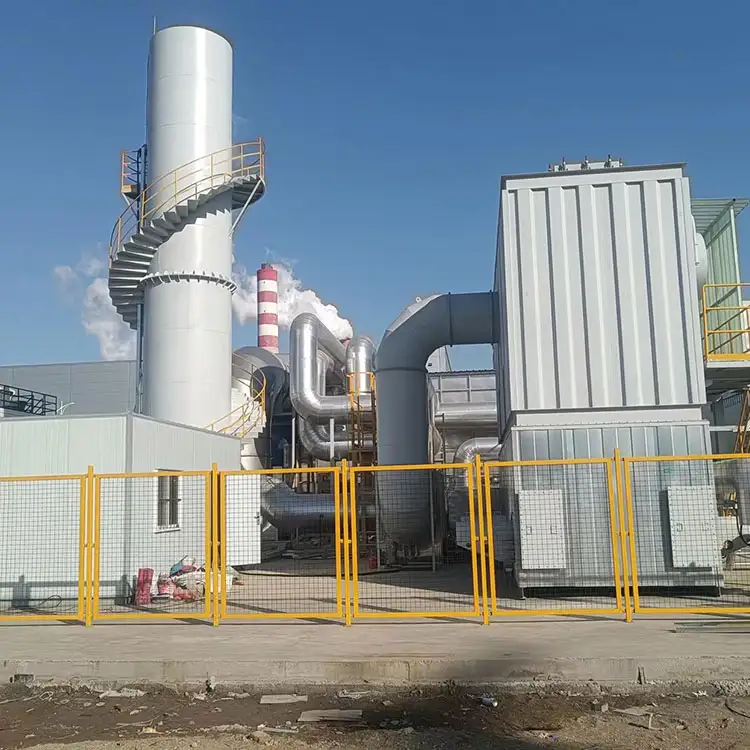
Having established a strong foothold in VOC treatment, Lvquan Environmental Protection Engineering Technology Co., Ltd. exemplifies engineering excellence in this field. The company operates from Gaoyou, Yangzhou—an industrial hub known as the “north gate” of Jiangsu. Formed as a joint-stock enterprise by professionals each possessing decades of hands-on experience in equipment design and manufacturing, Lvquan brings deep practical knowledge to every project.
The firm’s portfolio focuses on adsorption, incineration, recovery, and pretreatment technologies, with a special emphasis on thermal and catalytic oxidation systems. Over more than ten years, Lvquan has refined the research, design, fabrication, installation, and after-sales service of organic waste gas treatment installations. Their qualifications include Class A and B environmental pollution design and engineering certifications from Jiangsu Province, recognition as a provincial high-tech enterprise, and a Level III environmental protection specialized contracting license. The company maintains integrated management systems certified to ISO 9001 and ISO 14001, ensuring consistent quality and environmental stewardship.
Innovation is evident through thirteen utility-model patents and two high-tech invention patents related to catalyst support structures and heat recovery configurations. As an elected member of the Jiangsu Environmental Protection Industry Association, Lvquan actively contributes to technical standards development. Their manufacturing campus spans over nine thousand eight hundred square meters, equipped with more than two hundred machining and fabrication stations, supported by a dedicated team of one hundred twenty employees. This infrastructure enables an annual output capacity that meets demanding project schedules.
For any industrial operator seeking a robust catalytic incinerator designed for longevity and compliance, Lvquan offers complete in-house engineering — from initial feasibility study to commissioning and lifelong technical support. Their track record in VOCs abatement reflects a commitment to cleaner air and sustainable manufacturing practices.