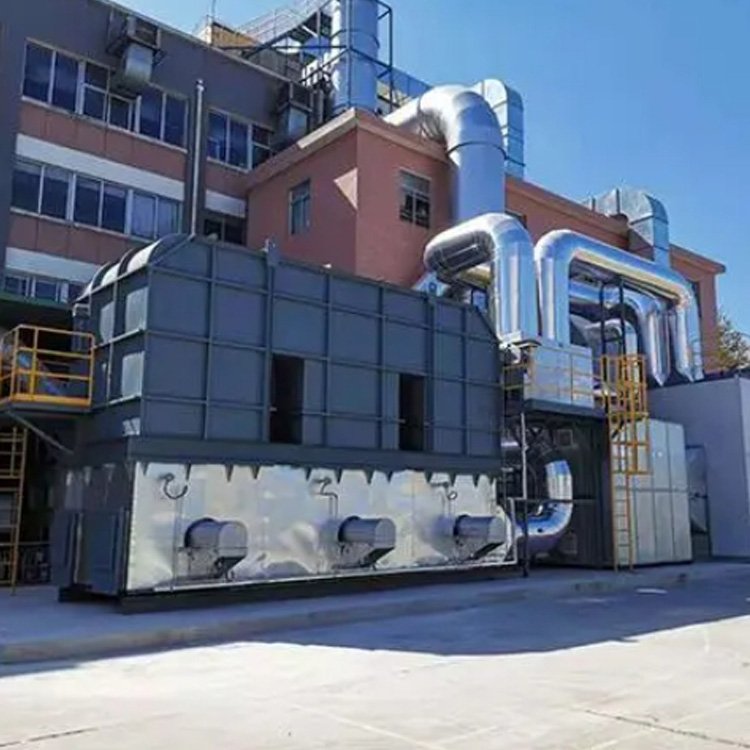
In industrial waste gas treatment systems, the reliability of flow control components directly impacts system uptime, safety, and regulatory compliance. The eccentric butterfly valve has emerged as a preferred solution for applications requiring frequent operation and tight sealing—particularly in Regenerative Thermal Oxidizers (RTOs) and other volatile organic compounds (VOCs) treatment systems. This article examines the Eccentric Butterfly Valve from Lvquan, exploring its design principles, operational advantages, and the engineering choices that make it suitable for demanding industrial environments. We look at the valve's eccentric structure, pneumatic actuation, sealing performance, and the applications where it outperforms conventional valve designs.
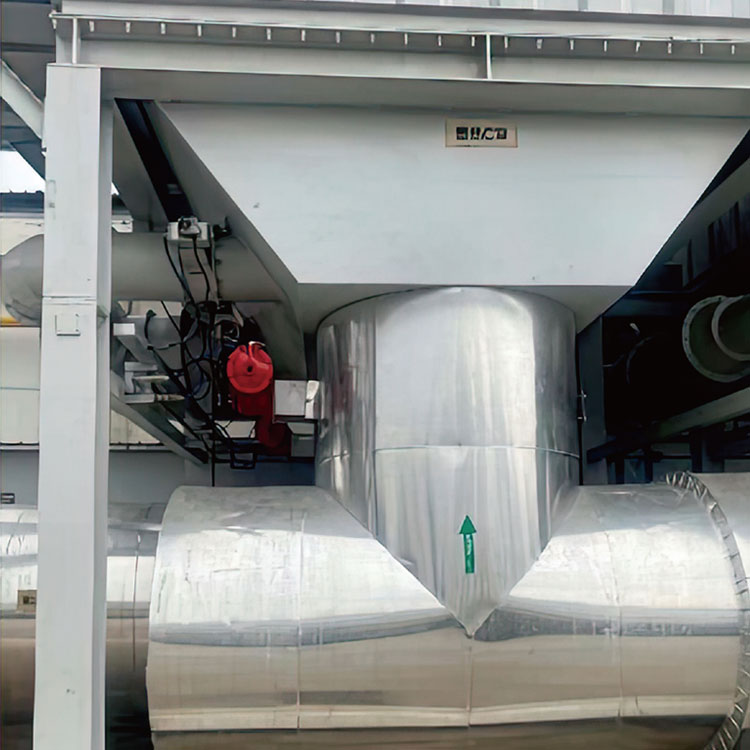
Volatile organic compounds (VOCs) treatment systems—whether thermal oxidizers, catalytic oxidizers, or adsorption recovery units—depend on precise flow control to function efficiently. Valves in these systems are not static components; they open and close thousands of times per year, often under high temperatures, corrosive conditions, or varying pressure differentials.
Traditional butterfly valves, while cost-effective for general purposes, often struggle in demanding VOCs applications. Their sealing performance degrades over time, and leakage rates can compromise system performance or violate environmental regulations. The eccentric butterfly valve addresses these limitations through a design that minimizes friction and wear while achieving a tighter seal.
Lvquan Environmental Protection Engineering Technology Co., Ltd. has been designing and manufacturing VOCs treatment equipment for over a decade. Based in Yangzhou, Jiangsu, the company holds multiple patents, including high-tech invention patents, and serves industries ranging from automotive and coil coating to pharmaceuticals and printing. Their Eccentric Butterfly Valve is specifically engineered for applications requiring frequent cycling and high sealing integrity—such as the inlet and outlet valves of large air volume three-chamber or multi-chamber RTO systems. This article provides a detailed look at the valve's structure, features, and the operational considerations that make it a practical choice for industrial engineers and facility managers.
Below is a summary of the key specifications and design features of the Eccentric Butterfly Valve from Lvquan.
| Parameter | Details |
| Product Name | Eccentric Butterfly Valve |
| Valve Type | Eccentric butterfly valve (double connecting rod, off-center disc) |
| Actuation | Pneumatic (compressed air driven) |
| Key Application | Inlet/outlet valves for large air volume RTO systems (3-chamber, multi-chamber) |
| Primary Industries | VOCs treatment, chemical processing, water treatment, industrial exhaust systems |
| Structure Features | Double connecting rod linkage, eccentric shaft, limiting rod for disc stroke |
| Key Advantage | Low leakage rate, reduced friction and wear, improved sealing performance |
| Operational Characteristics | Fast switching, short travel time, low noise, flexible operation |
| Maintenance | Simple structure, easy to maintain, seal ring material customizable |
| Limitations | Not suitable for corrosive, sticky, or granular dust fluid applications; explosion-proof treatment required in hazardous areas |
To understand why the eccentric butterfly valve outperforms conventional designs, it helps to look at how a standard butterfly valve works—and where it falls short.
In a standard concentric butterfly valve, the disc rotates around a central axis aligned with the center of the pipe. The sealing surfaces of the disc and the seat rub against each other throughout the rotation, causing friction that gradually wears down the seal and increases leakage rates. Over time, this friction also increases the torque required to operate the valve, placing additional strain on actuators.
The eccentric butterfly valve solves this problem by positioning the disc off-center relative to the valve body's sealing surface. This means the disc does not rub against the seal during rotation—it comes into contact only at the fully closed position. The result is significantly less friction, reduced wear on sealing surfaces, and a much tighter shutoff.
Lvquan's eccentric butterfly valve takes this a step further with a double connecting rod mechanism. The valve disc and eccentric shaft are connected by double connecting rods, with a limiting rod fixed at the back to control the disc stroke. This mechanical design ensures precise, repeatable operation even after thousands of cycles—critical for RTO systems that may switch valves several times per minute.
The Eccentric Butterfly Valve from Lvquan offers several features that make it a practical choice for industrial applications requiring reliable flow control.
The eccentric design, combined with a seal ring that can be selected from different materials based on application requirements, achieves a very low leakage rate. For VOCs treatment systems, this is essential—leaks can reduce destruction efficiency, increase operating costs, and lead to regulatory non-compliance.
The valve is powered by compressed air, driving the valve shaft to control the connecting rod's switching of the valve disc. A 90° rotation from the initial position completes one action (open to close, or close to open). The pneumatic actuator provides short travel time, low noise, and flexible operation—allowing the valve to respond quickly to changes in system demand.
The valve's straightforward mechanical design minimizes the number of components that can fail. This reduces the time and cost associated with maintenance, an important consideration for plant engineers who need to minimize downtime. The ability to choose different seal ring materials also allows the valve to be adapted to specific operating conditions without requiring a full design change.
The double connecting rod and eccentric shaft structure significantly improves sealing compared to conventional butterfly valves. The disc seals only when fully closed, eliminating the wear that occurs with constant rubbing during rotation. This extends the valve's service life and reduces the frequency of seal replacement.
The eccentric butterfly valve is particularly well-suited for applications that require a combination of tight sealing and frequent operation. Key use cases include:
• Regenerative Thermal Oxidizers (RTOs) – Used as inlet and outlet valves for large air volume three-chamber or multi-chamber RTO systems. These valves switch repeatedly to direct process gas through heated ceramic media beds, making reliable sealing essential for system efficiency.
• VOCs Treatment Systems – Applied in adsorption, incineration, and recovery systems where low leakage is critical for meeting emissions limits.
• Chemical and Petrochemical Processing – Used for flow control in low-pressure pipeline media where frequent actuation is required.
• Water Treatment Plants – Suitable for applications requiring reliable sealing in water distribution and wastewater systems.
• Industrial Exhaust Systems – Applied as switching valves in exhaust gas treatment trains, particularly where the media is clean gas (not corrosive, sticky, or containing granular dust).
Lvquan Environmental Protection Engineering Technology Co., Ltd. is headquartered in Gaoyou, Yangzhou, with a factory area of 9,800 square meters and more than 200 sets of machining equipment. The company employs 120 staff and has an annual production capacity of 100 million RMB.
The company holds Jiangsu Province environmental pollution design and governance double-grade qualifications, is recognized as a Jiangsu high-tech enterprise, and holds environmental protection professional third-level contracting qualifications. Lvquan has successfully passed ISO 9001 and ISO 14001 system certifications and holds 13 practical utility model patents and two high-tech invention patents. The company is also a member of the Jiangsu Province Environmental Protection Industry Association.
By digesting and adapting advanced foreign adsorption and incineration technology, Lvquan has developed products that have reached the advanced level of similar products in China and have gradually replaced imported equipment in many applications. This technical foundation is reflected in the design and manufacturing quality of their eccentric butterfly valve.
A: The eccentric design positions the disc off-center relative to the sealing surface, reducing friction and wear during rotation. This results in a much tighter seal, lower leakage rates, and longer service life—particularly important in applications with frequent cycling.
A: Yes. The eccentric butterfly valve is specifically designed for use as inlet and outlet valves in large air volume three-chamber and multi-chamber RTO systems, where fast switching and low leakage are essential.
A: The seal ring material can be selected based on application requirements. Lvquan offers different material options to suit various media and temperature conditions.
A: Lvquan advises against using the valve in corrosive, sticky, or granular dust fluid applications, as these can damage the seal or interfere with valve operation. For such applications, alternative materials or valve designs may be needed.
The Eccentric Butterfly Valve from Lvquan offers a reliable, performance-driven solution for industrial flow control applications requiring frequent cycling and tight sealing. Its eccentric design—combining a double connecting rod mechanism, off-center disc, and low-friction operation—delivers lower leakage rates and extended service life compared to conventional butterfly valves. These characteristics make it particularly well-suited for use in RTO systems and other VOCs treatment equipment, where valve reliability directly impacts system uptime and emissions compliance. If you are designing or upgrading a VOCs treatment system, or if you need a reliable flow control component for demanding industrial applications, contact Lvquan today. The engineering team can provide technical consultation, product specifications, and customized solutions tailored to your specific media, temperature, and operating conditions. Reach out via the website or email to discuss your requirements and receive a quotation.